Why should landlords attach evidence to every security deposit deduction they claim?
Photos and receipts turn a contested charge into one a tenant can accept.
Evidence heads off most disputes before they start. Photos show the damage is real and new, while receipts or estimates justify the amount charged. Together they turn a contested line item into one a tenant can accept, and they protect you if the matter ever escalates to mediation or small claims court.
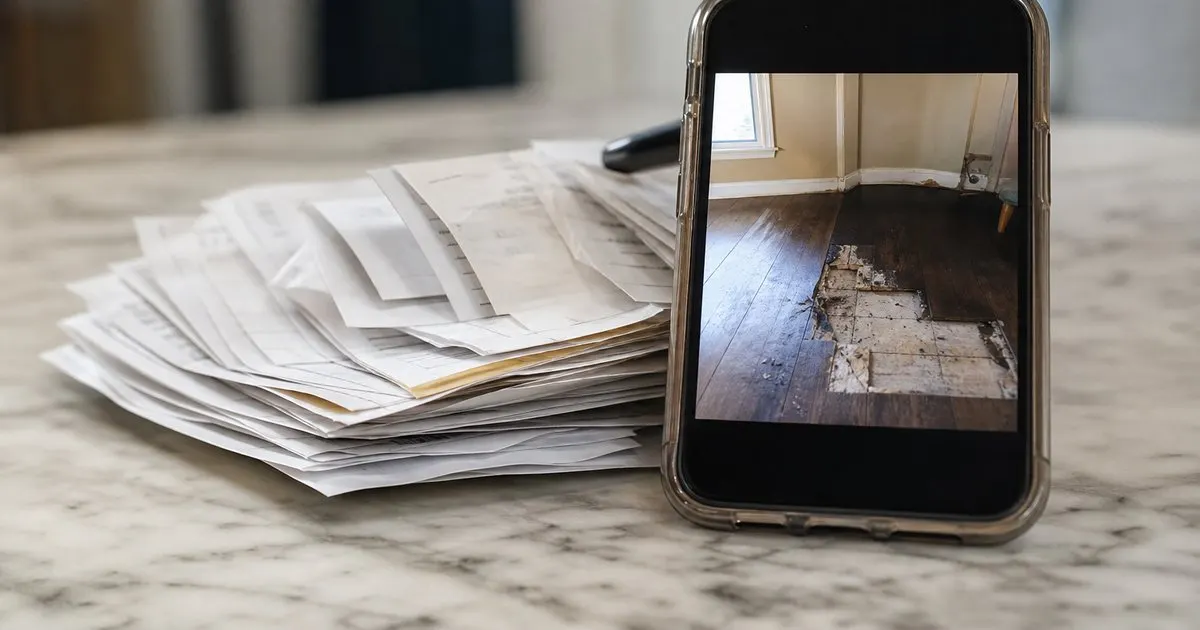
Evidence prevents disputes
A deduction without proof invites pushback. When a tenant cannot see why money was withheld, their natural response is to challenge it. Related: How should landlords handle a disputed security deposit deduction from a former tenant?
Attaching a photo and a receipt answers the question before it is asked. Most disputes never start when the basis is obvious.
Keep reading: How do landlords write a clear security deposit return statement for tenants?, What deductions can a landlord legally take from a tenant security deposit?, When must a landlord return a security deposit after a tenant moves out?. See how DepositBackr helps you security deposit deduction and return statements.
Photos show the damage
A clear image of the damage, ideally paired with a move-in photo of the same spot, shows that the problem is real and new.
Visual proof is hard to argue with. It grounds the deduction in fact rather than the landlord's word. Related: How much should a landlord deduct for carpet and paint based on remaining useful life?
Receipts show the cost
Receipts and estimates justify the amount. They demonstrate that the charge reflects an actual repair cost rather than an arbitrary figure. Related: Which repair costs can landlords fairly charge against a tenant deposit?
This matters because tenants often accept that damage exists but question the price. A receipt settles that second question directly.
Protection if it escalates
If a dispute reaches mediation or small claims, organized evidence is your strongest asset. A documented file is far more persuasive than a verbal account.
Some states expect this documentation as a matter of course. Because requirements vary, treat this as general guidance and confirm your local rules. Related: Do landlords need receipts to justify security deposit deductions in most states?
- Proof heads off most disputes
- Photos show the damage is real and new
- Receipts justify the amount charged
- Documentation protects you if it escalates

Julien Jimenez
Julien Jimenez is an independent software builder based in Paris. He designs, ships, and operates focused SaaS products for small businesses and independent professionals. Read the full author page.
Frequently asked questions
What evidence best supports a deposit deduction?
Dated photos that show the damage plus receipts, invoices, or written estimates for the repair. The photos prove the condition and the receipts justify the cost you charged.
Does evidence help if a dispute reaches small claims court?
Yes. Clear documentation is often decisive there. Organized photos and receipts let you show the damage and its cost, which is far stronger than testimony alone. This is not legal advice.
Clear deposit statements in minutes
Security deposit deduction and return statements. DepositBackr is built to help you put this into practice.
Start freeMore from the DepositBackr blog

How do landlords write a clear security deposit return statement for tenants?

What deductions can a landlord legally take from a tenant security deposit?

When must a landlord return a security deposit after a tenant moves out?
Get the DepositBackr playbook
Practical guides on security deposit statements, straight to your inbox as we publish them. No spam, unsubscribe any time.